Thursday, March 8, 2018

Guillain-Barre Fact Sheet | National Institute of Neurological Disorders and Stroke

Guillain-Barré Syndrome Fact Sheet | National Institute of Neurological Disorders and Stroke

I'm broken and don't know if I have the strength or will to fight anymore. 

it's already been about 10 weeks I've been in the hospital for months I have absolutely nobody is willing to help me especially my mother on and I'm really fading fast I simply don't know what to do except cry. 

I'm not afraid of that I'm afraid of living this life the rest of my life I can't even feed myself I can't take showers I can't I can't feel my fingers I can't file my telephone I can't I can't everything that I enjoy doing in my own little world has been completely taken problem I'm sure that this place is a lot of people especially my mother I'll who viciously violently attacked 
on multiple occasions trying to take my phone, a pair of denim jeans, gifts and packages sent from friends, Yes certificates Monday stamps one she even have ripped food out of my paralyzed and I are at Burger King a few weeks ago right after the hospital it was onion rings.  

She still in a quarter as her husband violently attacked me Rohan is my telephone broke it forever it was never replaced of this happened several years ago and I am iPad at an asked several people I was very concerned for my safety and this happens all the time I cannot take it any more. 

She wants even donated my cat that I had for 17 years to the cat shelter while I was sick in the hospital and she donated it under somebody else's name in a different county so there is absolutely nothing sacred or Safe or sacred to her. 

She threw out my computer, all photos of my sister and I and disconnected my cell phone from the family plan during a tornado. 

She not only threw out my computers and journals, books and photographs, she took a $14,000 Tax credit for it. 

I lost my benefits and my scholarship because she was using food stamps and claimed me as a dependent child in New York State while I was a full time employee with the State of Tennessee. 

my writing is really all that I have to leave behind and I am unable to process how any parent or human can treat someone with such contempt and cruelty. 

Forget about the fact that she is my mother. She treats many people this way and blames everyone else for destroying her life, and my poor sister had it 100x worse. 

All that glitters is not gold and I'm tired of being abused, attacked, exploited and blamed for her failed marriages. 

I suffered enough and tried to give her what I felt she needed to feel loved and appreciated knowing that whatever hell she lives through or imagined is far worse than anything that could possibly warrant, justify or explain her need to behave with such reckless disregard and contempt for her own children. 

With sadness, 

I must accept that is who she is and control my sadness and anger that I let go off years ago.

Now I must find a trauma specialist and I can't even grieve the loss of my youth, vitality or have a fighting chance to pursue and enjoy the things I enjoy. 

Chillieh penguin out 

What is Guillain-Barré syndrome?

What is Guillain-Barré syndrome?
What causes Guillain-Barré syndrome?
How is Guillain-Barré syndrome diagnosed?
How is Guillain-Barré treated?
What is the long-term outlook for those with Guillain-Barré syndrome?
What research is being done?
Where can I get more information?


Guillain-Barré syndrome (GBS) is a disorder in which the body's immune system attacks part of the peripheral nervous system. The first symptoms of this disorder include varying degrees of weakness or tingling sensations in the legs. In many instances the symmetrical weakness and abnormal sensations spread to the arms and upper body. These symptoms can increase in intensity until certain muscles cannot be used at all and, when severe, the person is almost totally paralyzed. In these cases the disorder is life threatening - potentially interfering with breathing and, at times, with blood pressure or heart rate - and is considered a medical emergency. Such an individual is often put on a ventilator to assist with breathing and is watched closely for problems such as an abnormal heart beat, infections, blood clots, and high or low blood pressure. Most individuals, however, have good recovery from even the most severe cases of Guillain-Barré syndrome, although some continue to have a certain degree of weakness.

Guillain-Barré syndrome can affect anybody. It can strike at any age and both sexes are equally prone to the disorder. The syndrome is rare, however, afflicting only about one person in 100,000. Usually Guillain-Barré occurs a few days or weeks after the patient has had symptoms of a respiratory or gastrointestinal viral infection. Occasionally surgery will trigger the syndrome. Recently, some countries worldwide have reported an increased incidence of GBS following infection with the Zika virus.  In rare instances vaccinations may increase the risk of GBS.

After the first clinical manifestations of the disease, the symptoms can progress over the course of hours, days, or weeks. Most people reach the stage of greatest weakness within the first 2 weeks after symptoms appear, and by the third week of the illness 90 percent of all patients are at their weakest.

What causes Guillain-Barré syndrome?

No one yet knows why Guillain-Barré — which is not contagious — strikes some people and not others. Nor does anyone know exactly what sets the disease in motion.

What scientists do know is that the body's immune system begins to attack the body itself, causing what is known as an autoimmune disease. Usually the cells of the immune system attack only foreign material and invading organisms. In Guillain-Barré syndrome, however, the immune system starts to destroy the myelin sheath that surrounds the axons of many peripheral nerves, or even the axons themselves (axons are long, thin extensions of the nerve cells; they carry nerve signals). The myelin sheath surrounding the axon speeds up the transmission of nerve signals and allows the transmission of signals over long distances.

In diseases in which the peripheral nerves' myelin sheaths are injured or degraded, the nerves cannot transmit signals efficiently. That is why the muscles begin to lose their ability to respond to the brain's commands, commands that must be carried through the nerve network. The brain also receives fewer sensory signals from the rest of the body, resulting in an inability to feel textures, heat, pain, and other sensations. Alternately, the brain may receive inappropriate signals that result in tingling, "crawling-skin," or painful sensations. Because the signals to and from the arms and legs must travel the longest distances they are most vulnerable to interruption. Therefore, muscle weakness and tingling sensations usually first appear in the hands and feet and progress upwards.

When Guillain-Barré is preceded by a viral or bacterial infection, it is possible that the virus has changed the nature of cells in the nervous system so that the immune system treats them as foreign cells. It is also possible that the virus makes the immune system itself less discriminating about what cells it recognizes as its own, allowing some of the immune cells, such as certain kinds of lymphocytes and macrophages, to attack the myelin. Sensitized T lymphocytes cooperate with B lymphocytes to produce antibodies against components of the myelin sheath and may contribute to destruction of the myelin. In two forms of GBS, axons are attacked by antibodies against the bacteria Campylobacter jejuni, which react with proteins of the peripheral nerves.  Acute motor axonal neuropathy is particularly common in Chinese children.  Scientists are investigating these and other possibilities to find why the immune system goes awry in Guillain-Barré syndrome and other autoimmune diseases. The cause and course of Guillain-Barré syndrome is an active area of neurological investigation, incorporating the cooperative efforts of neurological scientists, immunologists, and virologists.

How is Guillain-Barré syndrome diagnosed?

Guillain-Barré is called a syndrome rather than a disease because it is not clear that a specific disease-causing agent is involved. A syndrome is a medical condition characterized by a collection of symptoms (what the patient feels) and signs (what a doctor can observe or measure). The signs and symptoms of the syndrome can be quite varied, so doctors may, on rare occasions, find it difficult to diagnose Guillain-Barré in its earliest stages.

Several disorders have symptoms similar to those found in Guillain-Barré, so doctors examine and question patients carefully before making a diagnosis. Collectively, the signs and symptoms form a certain pattern that helps doctors differentiate Guillain-Barré from other disorders. For example, physicians will note whether the symptoms appear on both sides of the body (most common in Guillain-Barré) and the quickness with which the symptoms appear (in other disorders, muscle weakness may progress over months rather than days or weeks). In Guillain-Barré, reflexes such as knee jerks are usually lost. Because the signals traveling along the nerve are slower, a nerve conduction velocity (NCV) test can give a doctor clues to aid the diagnosis. In Guillain-Barré patients, the cerebrospinal fluid that bathes the spinal cord and brain contains more protein than usual. Therefore a physician may decide to perform a spinal tap, a procedure in which a needle is inserted into the patient's lower back and a small amount of cerebrospinal fluid from the spinal column is withdrawn for study.

How is Guillain-Barré treated?

There is no known cure for Guillain-Barré syndrome. However, there are therapies that lessen the severity of the illness and accelerate the recovery in most patients. There are also a number of ways to treat the complications of the disease.

Currently, plasma exchange (also called plasmapheresis) and high-dose immunoglobulin therapy are used. Both of them are equally effective, but immunoglobulin is easier to administer. Plasma exchange is a method by which whole blood is removed from the body and processed so that the red and white blood cells are separated from the plasma, or liquid portion of the blood. The blood cells are then returned to the patient without the plasma, which the body quickly replaces. Scientists still don't know exactly why plasma exchange works, but the technique seems to reduce the severity and duration of the Guillain-Barré episode. This may be because plasmapheresis can remove antibodies and other immune cell-derived factors that could contribute to nerve damage.

In high-dose immunoglobulin therapy, doctors give intravenous injections of the proteins that, in small quantities, the immune system uses naturally to attack invading organisms. Investigators have found that giving high doses of these immunoglobulins, derived from a pool of thousands of normal donors, to Guillain-Barré patients can lessen the immune attack on the nervous system. Investigators don't know why or how this works, although several hypotheses have been proposed.

The use of steroid hormones has also been tried as a way to reduce the severity of Guillain-Barré, but controlled clinical trials have demonstrated that this treatment not only is not effective but may even have a deleterious effect on the disease.

The most critical part of the treatment for this syndrome consists of keeping the patient's body functioning during recovery of the nervous system. This can sometimes require placing the patient on mechanical ventilatory assistance, a heart monitor, or other machines that assist body function. The need for this sophisticated machinery is one reason why Guillain-Barré syndrome patients are usually treated in hospitals, often in an intensive care ward. In the hospital, doctors can also look for and treat the many problems that can afflict any paralyzed patient - complications such as pneumonia or bed sores.

Often, even before recovery begins, caregivers may be instructed to manually move the patient's limbs to help keep the muscles flexible and strong and to prevent venous sludging (the buildup of red blood cells in veins, which could lead to reduced blood flow) in the limbs which could result in deep vein thrombosis.  Later, as the patient begins to recover limb control, physical therapy begins. Carefully planned clinical trials of new and experimental therapies are the key to improving the treatment of patients with Guillain-Barré syndrome. Such clinical trials begin with the research of basic and clinical scientists who, working with clinicians, identify new approaches to treating patients with the disease.

What is the long-term outlook for those with Guillain-Barré syndrome?

Guillain-Barré syndrome can be a devastating disorder because of its sudden and unexpected onset. In addition, recovery is not necessarily quick. As noted above, patients usually reach the point of greatest weakness or paralysis days or weeks after the first symptoms occur. Symptoms then stabilize at this level for a period of days, weeks, or, sometimes, months. The recovery period may be as little as a few weeks or as long as a few years. About 30 percent of those with Guillain-Barré still have a residual weakness after 3 years. About 3 percent may suffer a relapse of muscle weakness and tingling sensations many years after the initial attack.

Guillain-Barré syndrome patients face not only physical difficulties, but emotionally painful periods as well. It is often extremely difficult for patients to adjust to sudden paralysis and dependence on others for help with routine daily activities. Patients sometimes need psychological counseling to help them adapt.

What research is being done?

Scientists are concentrating on finding new treatments and refining existing ones. Scientists are also looking at the workings of the immune system to find which cells are responsible for beginning and carrying out the attack on the nervous system. The fact that so many cases of Guillain-Barré begin after a viral or bacterial infection suggests that certain characteristics of some viruses and bacteria may activate the immune system inappropriately. Investigators are searching for those characteristics. Certain proteins or peptides in viruses and bacteria may be the same as those found in myelin, and the generation of antibodies to neutralize the invading viruses or bacteria could trigger the attack on the myelin sheath. As noted previously, neurological scientists, immunologists, virologists, and pharmacologists are all working collaboratively to learn how to prevent this disorder and to make better therapies available when it strikes.

Where can I get more information?

For more information on neurological disorders or research programs funded by the National Institute of Neurological Disorders and Stroke, contact the Institute's Brain Resources and Information Network (BRAIN) at:

BRAIN
P.O. Box 5801
Bethesda, MD 20824
800-352-9424
http://www.ninds.nih.gov

Information also is available from the following organizations:

GBS/CIDP Foundation International
The Holly Building 104 1/2 Forrest Ave.
Narberth, PA 19072
info@gbs-cidp.org
http://www.gbs-cidp.org
Tel: 610-667-0131; 866-224-3301
Fax: 610-667-7036


"Guillain-Barré Syndrome Fact Sheet", NINDS, Publication date July 2011.

NIH Publication No. 11-2902

Back to Guillain-Barré Syndrome Information Page

See a list of all NINDS disorders

Publicaciones en Español

Síndrome de Guillain-Barré


Prepared by:
Office of Communications and Public Liaison
National Institute of Neurological Disorders and Stroke
National Institutes of Health
Bethesda, MD 20892

NINDS health-related material is provided for information purposes only and does not necessarily represent endorsement by or an official position of the National Institute of Neurological Disorders and Stroke or any other Federal agency. Advice on the treatment or care of an individual patient should be obtained through consultation with a physician who has examined that patient or is familiar with that patient's medical history.

All NINDS-prepared information is in the public domain and may be freely copied. Credit to the NINDS or the NIH is appreciated.



^ed 

Wednesday, March 7, 2018

URGENT CALL TO ACTION: Trump FCC Moves Forward Plans to Gut Lifeline Program and Strand Millions on the Wrong Side of the Digital Divide

Trump FCC Moves Forward Plans to Gut Lifeline Program and Strand Millions on the Wrong Side of the Digital Divide | Free Press
DailyDDoSe March 6, 2016

URGENT CALL TO ACTION!! 

Urgent! Please contact the FCC immediately!! 

Comcast already refusing discounted internet plans for children, the disabled and the poor. 

How can they possibly compete without access to information, employment and community services. 

I URGE YOU TO CALL, WRITE, PETITION AND SPEAK FOR THOSE WHO DON'T HAVE A VOICE!! 

Follow @freepress @eff for Update grassroots advocacy to close the Digital Divide and stop the @FCC @comcast and @realdonaldtrump from shutting down subsidized public utilities from the poor, elderly and disabled. 

Give them a LIFELINE and a fighting chance for a better life. 

Trump FCC Moves Forward Plans to Gut Lifeline Program and Strand Millions on the Wrong Side of the Digital Divide

WASHINGTON — The FCC voted along party lines on Thursday to move forward plans to eviscerate the Lifeline program, which provides a modest $9.25 monthly subsidy to most recipients so that millions of poor people can connect to communications services.

The agency's Republican leadership voted to advance a proceeding to consider, among other things, implementing a budget cap, which would arbitrarily limit program participation or slash funding to fully eligible recipients.

Subsequent FCC proposals even float the possibility of a lifetime benefits cap that would arbitrarily cut off funding for the most vulnerable users, such as elderly people and people with disabilities, by limiting the amount of time an individual can use the program.

The proposal also eliminates program participation by "non-facilities-based providers," including four of the top five Lifeline providers, accounting for more than half of the program's current expenditures. This would likely eventually zero out participation by providers serving more than 70 percent of current Lifeline beneficiaries — and would have an immediate impact on Lifeline service to tribal territories as the FCC moves to eliminate resellers on tribal lands.

In some parts of the country, non-facilities-based carriers are the only ones offering service. They tend to serve the most vulnerable communities — whom large facilities-based carriers have long shunned — and they've provided a level of competition that's led to better services at the same $9.25 subsidy.

The FCC majority gave no rationale for its attack — aside from vague rhetoric about program abuse and fraud. This assault on Lifeline comes in spite of the significant reforms the FCC has begun under prior administrations to streamline the program, efforts that are still underway  and already having a positive impact.

Lifeline was created during the Reagan administration to help the most vulnerable people in the United States gain access to communications services that meet their basic needs. It was updated under the George W. Bush administration to allow coverage for wireless phones, and then under the Obama administration to include explicit subsidies for internet service. On his first day as FCC chairman, Ajit Pai claimed that bridging the digital divide was a top priority of his administration.

Free Press Deputy Director and Senior Counsel Jessica J. González made the following statement:

"Let's be crystal clear about what's happening here. Three privileged FCC officials — Chairman Ajit Pai, and Commissioners Mike O'Rielly and Brendan Carr — plan to eliminate affordable phone and internet-access options for millions of poor Americans.

"They're doing this over the objections of Native American tribal leaders, poor people, single moms, unhoused people, people of color, elderly people, victims of natural disasters, veterans and people with disabilities, all of whom will be disproportionately harmed by this extreme FCC proposal.

"They're racing ahead despite the bipartisan objections from Senate and House leaders, who have heard from concerned constituents that this will harm their ability to search for jobs, advance their education, meet their basic needs and stay informed.

"These three commissioners will claim that their action helps close the digital divide, but that's a lie. What they're actually doing is giving breaks to rich companies while taking from the poor — and in this case, even taking away business options for the smaller companies that serve the Lifeline population. As one housing advocate told me not long ago in Los Angeles, 'The trickle down doesn't trickle down to Skid Row.'

"Pai, O'Rielly and Carr allege that such action is necessary to quell waste, fraud and abuse in the program. This rhetoric about fraud is overblown and has racist undertones. The FCC has already moved in 2016 and earlier to address these issues. Chairman Pai should implement the reforms put in place by his predecessors, not starve the program.

"Tonight these three men will return home to their families, who have food, clothes, internet access and a place to rest their heads. They will kick off this holiday season in comfort and warmth while the less fortunate have to endure their cruel decision to rip a path to upward mobility out of their hands."

Thank you, 

Elyssa aka Chillieh 🐧

^ed 

Monday, February 12, 2018

Opportunity for everyone - Google to the Rescue

Opportunity for everyone


Opportunity for everyone

Grow with Google

Sundar Pichai

CEO

Published Oct 12, 2017

Editor's note: Today in Pittsburgh, PA, we announced three initiatives that expand on our efforts to create more opportunity for everyone: Grow with Google, a new initiative to help Americans with the skills they need to get a job or grow their business, $1 billion in Google.org grants over five years to nonprofits around the world, and 1 million hours that Googlers can volunteer to nonprofits. This is a modified version of the remarks our CEO Sundar Pichai gave at today's event.

To me Pittsburgh is a special place. It was the first city I saw in America when I came here 24 years ago. It was the first time I left India. In fact, it was the first time I'd been inside a plane. My aunt and uncle have lived here for over 30 years and were kind enough to let me stay with them for a few days. My aunt took me to see my first mall in the U.S. I remember riding up and the down the hills of the city, feeling a little carsick. It's pretty hilly down here.  We even went on a road trip to see the Niagara Falls, but what I really remember was when my uncle pointed out a Cadillac on the road. I had only seen Cadillacs in movies before, and that was pretty amazing to see.


When people talked about Pittsburgh, they typically talked about the pioneers of the industrial revolution and steel. But to me, Pittsburgh was about an amazing university, Carnegie Mellon, and its great computer science department. I was here before the Internet really took off, but the city was already changing. The number of high-tech jobs had doubled.  And the pace of change has never slowed since. As a new arrival, I was homesick but struck by something new: the sense of optimism.

I remain a technology optimist. Not because I believe in technology, but because I believe in people.

At Google, our mission is to make sure that information serves everyone, not just a few. A child in a school here in Pittsburgh can access the same information on Google as a professor at Carnegie Mellon. In the end, the Internet is a powerful equalizer, capable of propelling new ideas and people forward.

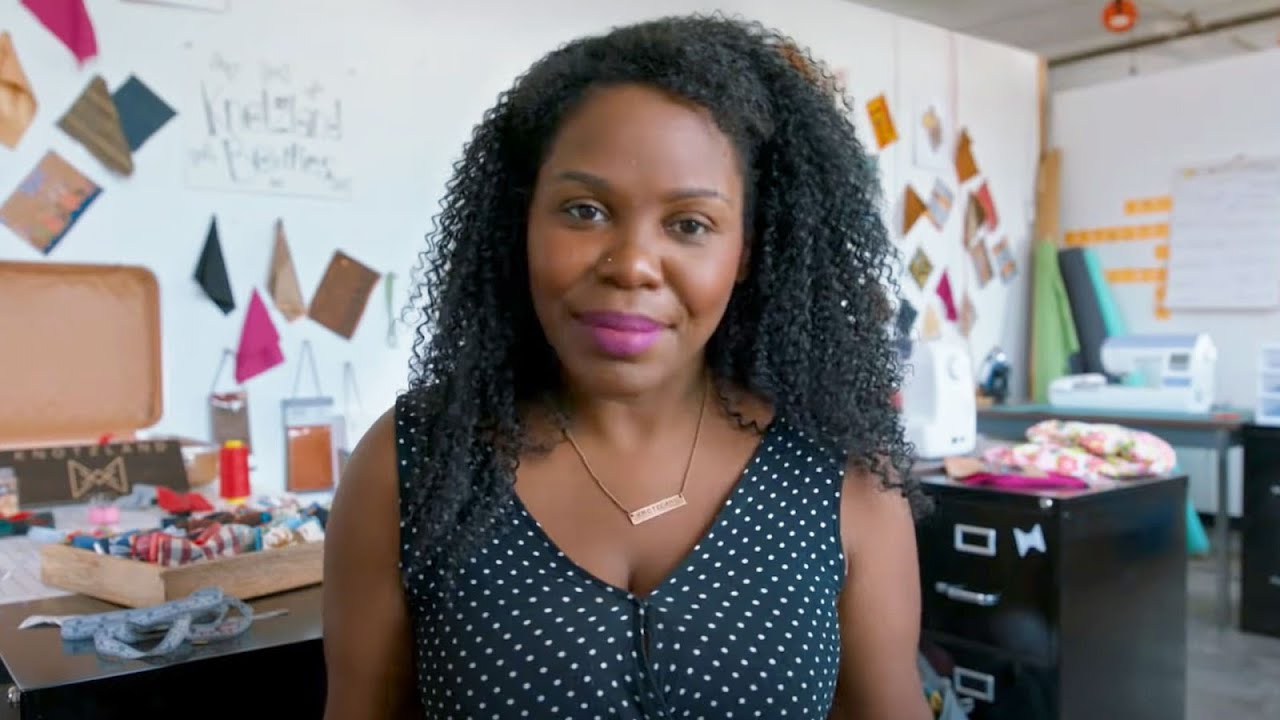
It means that people like Nisha Blackwell can use Google's tools to bounce back from being laid off from a coffee shop. And to do it not by looking for work, but by pursuing their passions; to become entrepreneurs. She learned how to sew and make bow ties on YouTube. She attended a Google-sponsored program aimed at urban entrepreneurs that inspired her to start Knotzland, a handcrafted bowtie company that she runs out of the Homewood neighborhood. Nisha is here with us today and we're humbled by the impact she's had on her community.

Nisha Blackwell: Self-taught CEO

Nisha Blackwell: Self-taught CEO

Nisha learned how to sew and make bow ties on YouTube. Now she runs Knotzland, a handcrafted bow tie company.

We also think better access to information can revitalize local and family businesses in today's economy. A fire and the financial crisis of 2008 forced Scott Baker's family baking business that had been around since 1875 into bankruptcy. He rebuilt his family's heritage on a new digital foundation: He restarted the business as 5 Generation Bakers and uses Google's tools to reach consumers across the northeast. The Jenny Lee swirl bread that's been his family's trademark is still available to buy, marketed in an entirely new way. Scott, we're glad to have you with us today, and I look forward to having some swirl bread later.

5 Generation Bakers: Remaking a legacy

5 Generation Bakers: Remaking a legacy

Scott Baker rebuilt his family's baking heritage on a new digital foundation.

Nisha and Scott's stories are inspiring, but they're also inspiringly normal. These kinds of transformations happen across the city, across the state, across the nation, every day. In Pennsylvania, about 58,000 businesses and nonprofits use our search and advertising tools to grow. We estimate last year that those tools helped generate economic activity of about $6.32 billion in this state alone. And when you look across the nation that impact rises to at least $222 billion. And that's because they're built for everyone.

We think the Internet should allow everyone to become a developer, entrepreneur or creator, and we build our platforms around that. Researchers estimate that Android supported about 1.3 million developer jobs in the U.S. in 2016. Last year in the U.S., we paid out $13.5 billion to a range of distribution and content partners. That includes news publishers, developers and all those YouTube creators.

We're always asking how we can make sure the opportunities created by new technology are available for everyone, in any city, in any state.

In asking that, we recognize that there are large gaps in opportunity across the U.S.  

These are tough gaps. For instance, the nature of work is fundamentally changing. And that is shifting the link between education, training and opportunity. Young people already feel this. An Economist survey found that less than half of 18- to 25-year-olds believe their education gives them the skills they need to enter today's workforce. That's a significant gap that's only going to become more urgent. One-third of jobs in 2020 will require skills that aren't common today.

It's a big problem and, at Google, whenever we see a big problem, we ask how we can make it easier for everyone to solve it.

We've been looking at our products for new opportunities to help people navigate this new terrain. We recently used machine learning to find a new way to search for job postings that cluster jobs by location, sector and industry. And it works. Since launching earlier this year, we have connected tens of millions of people to new job opportunities. The number of job postings appearing on Google Search in Pittsburgh has increased six-fold.

We've also been looking outside of Google for fresh approaches. Since 2005, 1 percent of our profits have gone to finding innovative nonprofits and helping them expand with funding, tools, and volunteers from around Google. Just in the past few months, we've committed $100 million to nonprofits tackling gaps in the labor market and in education. Today, we're committing a further $20 million to organizations including UNHCR, Learning Equality, and Room to Read.

We're seeing how hard educational gaps can be overcome. We've already brought down the price of schoolroom tech through Google for Education and over 70 million teachers and students worldwide use our free education products.

But technology alone isn't enough, and even with tech, some schools are struggling. The Dynamic Learning Project makes sure that teachers have the coaching they need to get the most out of whatever tech resources they have. We're working on this in 50 underserved schools, and 11 of them are in Allegheny County. I'll be visiting one later today.

That's one example among many. As we looked across all our programs, we saw three ways to greatly enhance opportunity for everyone. And we're announcing them today.

  • We're launching Grow with Google, a new initiative to help Americans with the skills they need to get a job or grow their business.

  • Globally, we will provide $1 billion in grants over the next five years to nonprofits working on three key areas that we think will boost opportunity.  

  • Finally, Googlers can volunteer 1 million hours to help these front-line organizations.

First, Grow with Google is there to give anyone in America the tools and training they need to get a job, for free. We understand there's uncertainty and even concern about the pace of technological change. But we know that technology will be an engine of America's growth for years to come.

We've launched an online hub—google.com/grow—where job seekers, teachers, local business owners, and developers can get significant training and professional certificates.

So if you're looking to learn or teach the skills that employers value, look up Applied Digital Skills. We've been workshopping this with 27,000 students at middle and high schools. It teaches you the basics of working with tech in the modern world: from spreadsheets to email. It's now available to everyone, and we're looking to expand it to community colleges and vocational programs. We're also launching a G Suite certification that will allow people to prove their proficiency in essential workplace tools.  

For people who want to get closer to tech, we're also putting together programs to make IT far more accessible as a career. In January we'll launch a first-of-its-kind program in IT support that we developed on Coursera. The IT Support Professional Certificate includes hands-on labs to take learners to job readiness in eight to 12 months. We will sponsor 2,600 full scholarships through non-profit organizations; 100 of them will go to an organization here in Pittsburgh, Partner4Work. To ensure these courses directly translate into jobs, we're connecting graduates with potential employers including Bank of America, L'Oreal, PNC Bank, and, of course, Google.

And for people who want to build tech directly, I can't think of a better start than becoming a developer. We're launching the Google Developer Scholarship Challenge, a rigorous training program, free of charge. This is a partnership with Udacity to offer 50,000 scholarship opportunities for people who want to build things on the web and Android.

All these programs are available wherever you have an Internet connection. But we also recognize that there's no substitute for meeting people when you're looking to switch careers or move your life into new territory.

So we're launching a Grow with Google tour. Googlers will team up with libraries and community organizations across the country to host these events. We'll provide career advice and training for people and businesses, including helping small businesses get online. Our first stop is Pittsburgh. The next stop will be Indianapolis, another fast-growing city for technology jobs.

  • Students at Langley K-8 School in Pittsburgh, PA use Chromebooks as a part of a science experiment. The Dynamic Learning Project is a pilot program that provides coaching for teachers on integrating technology into their classrooms in meaningful ways.

I'm optimistic about the impact that these programs will have. But as I said before, we're looking for a bigger change. That requires a deeper partnership with the people working on these gaps around the world.

And that's why we're committing to give $1 billion to front-line organizations addressing these challenges over five years.

Google.org will use its philanthropic expertise to fund organizations working in three areas: closing the world's education gap, helping people prepare for the changing nature of work, and ensuring that no one is excluded from opportunity.

I already spoke of some grants in these areas. Today, we're announcing $10 million in support of Goodwill, the United States' largest workforce development nonprofit, to launch the Goodwill Digital Career Accelerator. It is the largest grant Google.org has ever given to a single organization.

Goodwill's mission to train

Goodwill's mission to train

We're announcing $10 million in support of Goodwill—the largest grant Google.org has ever given to a single organization.

Goodwill has phenomenal reach. Over 80 percent of Americans live within 10 miles of its centers. And it has a long record of helping people who despaired of ever getting work again. With our support, it will be able to offer 1.2 million people digital skills and career opportunities in all 156 Goodwills across every state over the next three years. We also have an open invitation to nonprofits to submit their ideas to address economic opportunity in Pittsburgh to the Pittsburgh Impact Challenge; the winners will get funds and mentoring from Google.

We hope these nonprofits will find these funds transformative.

We've always believed that to truly help organizations, you have to offer your time along with your philanthropy.

Googlers are committing 1 million employee volunteer hours over five years to help organizations working on the front lines of these issues. The volunteering can take many forms. Sometimes, it's just showing up to help set up an event. Sometimes, we take a close look at technical issues nonprofits might be having and help them innovate more quickly. Googlers staffed a 4-H booth at the Illinois State Fair aimed at getting kids excited about science and tech.

In the case of Goodwill, 1,000 Googlers plan to be available to do career coaching over the next three years. Tech can seem intimidating. But we've found that having role models and people right in front of you can make the journey seem much easier.  We think our philanthropy has to be paired with our people to be effective. We hope that 1 million hours can help make a difference.

At the end of the day, we make the most progress by working together. What you here in Pittsburgh and what people across America do with our tools and resources is what counts. We don't have all the answers. The people closest to the problem are usually the people closest to the solution. We want to help them reach it sooner.

I said earlier how Pittsburgh amazed me when I first arrived here. And I feel that more than ever today. I'm excited to see all the ways the people of this city will build a future that works for them, and for everyone.


^ed 

With Gaza in Financial Crisis, Fears That ‘an Explosion’s Coming’ - The New York Times

With Gaza in Financial Crisis, Fears That 'an Explosion's Coming' - The New York Times
Trump and Netanyahu: two power hungry warmongers sharing their love for weapons and brown people and are hide behind frantic paranoia. 

No, warlords. 

Most decent human beings don't hate Jews or White people.  

Just assholes. 

With Gaza in Financial Crisis, Fears That 'an Explosion's Coming'

A woman begged for money as residents of Gaza lined up to withdraw what money they could from A.T.M.s at the Bank of Palestine in Gaza City.CreditWissam Nassar for The New York Times

GAZA CITY — The payday line at a downtown A.T.M. here in Gaza City was dozens deep with government clerks and pensioners, waiting to get what cash they could.

Muhammad Abu Shaaban, 45, forced into retirement two months ago, stood six hours to withdraw a $285 monthly check — a steep reduction from his $1,320 salary as a member of the Palestinian Authority's presidential guard.


Elyssa D. Durant 

Sunday, February 11, 2018

Smartphone data tracking is even creepier than you think

Smartphone data tracking is even creepier than you think

And Apple told me that GPS feature was just a glitch when my iPhone was stolen at the Apple store
next to Trump Plaza on 9/11. 

Smartphone data tracking is even creepier than you think

Smartphones rule our lives. Having information at our fingertips is the height of convenience. They tell us all sorts of things, but the information we see and receive on our smartphones is just a fraction of the data they generate. By tracking and monitoring our behaviour and activities, smartphones build a digital profile of shockingly intimate information about our personal lives.

These records aren't just a log of our activities. The digital profiles they create are traded between companies and used to make inferences and decisions that affect the opportunities open to us and our lives. What's more, this typically happens without our knowledge, consent or control.

New and sophisticated methods built into smartphones make it easy to track and monitor our behaviour. A vast amount of information can be collected from our smartphones, both when being actively used and while running in the background. This information can include our location, internet search history, communications, social media activity, finances and biometric data such as fingerprints or facial features. It can also include metadata – information about the data – such as the time and recipient of a text message.

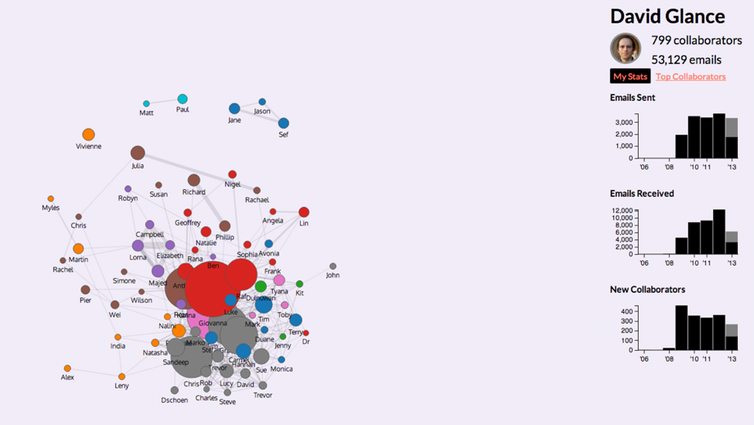
Your emails can reveal your social network. David Glance

Each type of data can reveal something about our interests and preferences, views, hobbies and social interactions. For example, a study conducted by MIT demonstrated how email metadata can be used to map our lives, showing the changing dynamics of our professional and personal networks. This data can be used to infer personal information including a person's background, religion or beliefs, political views, sexual orientation and gender identity, social connections, or health. For example, it is possible to deduce our specific health conditions simply by connecting the dots between a series of phone calls.

Different types of data can be consolidated and linked to build a comprehensive profile of us. Companies that buy and sell data – data brokers – already do this. They collect and combine billions of data elements about people to make inferences about them. These inferences may seem innocuous but can reveal sensitive information such as ethnicity, income levels, educational attainment, marital status, and family composition.

A recent study found that seven in ten smartphone apps share data with third-party tracking companies like Google Analytics. Data from numerous apps can be linked within a smartphone to build this more detailed picture of us, even if permissions for individual apps are granted separately. Effectively, smartphones can be converted into surveillance devices.

The result is the creation and amalgamation of digital footprints that provide in-depth knowledge about your life. The most obvious reason for companies collecting information about individuals is for profit, to deliver targeted advertising and personalised services. Some targeted ads, while perhaps creepy, aren't necessarily a problem, such as an ad for the new trainers you have been eyeing up.

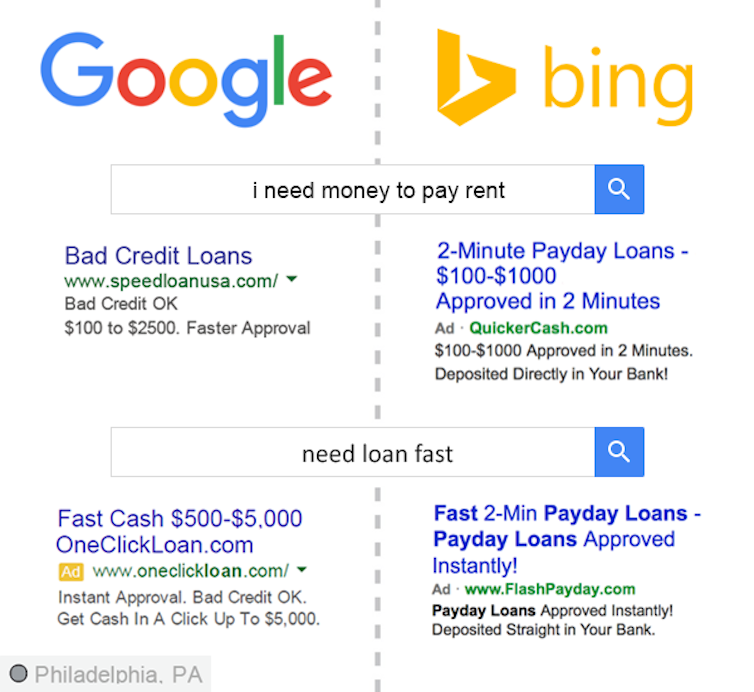
Payday load ads. Upturn, CC BY

But targeted advertising based on our smartphone data can have real impacts on livelihoods and well-being, beyond influencing purchasing habits. For example, people in financial difficulty might be targeted for ads for payday loans. They might use these loans to pay for unexpected expenses, such as medical bills, car maintenance or court fees, but could also rely on them for recurring living costs such as rent and utility bills. People in financially vulnerable situations can then become trapped in spiralling debt as they struggle to repay loans due to the high cost of credit.

Targeted advertising can also enable companies to discriminate against people and deny them an equal chance of accessing basic human rights, such as housing and employment. Race is not explicitly included in Facebook's basic profile information, but a user's "ethnic affinity" can be worked out based on pages they have liked or engaged with. Investigative journalists from ProPublica found that it is possible to exclude those who match certain ethnic affinities from housing ads, and certain age groups from job ads.

This is different to traditional advertising in print and broadcast media, which although targeted is not exclusive. Anyone can still buy a copy of a newspaper, even if they are not the typical reader. Targeted online advertising can completely exclude some people from information without them ever knowing. This is a particular problem because the internet, and social media especially, is now such a common source of information.

Social media data can also be used to calculate creditworthiness, despite its dubious relevance. Indicators such as the level of sophistication in a user's language on social media, and their friends' loan repayment histories can now be used for credit checks. This can have a direct impact on the fees and interest rates charged on loans, the ability to buy a house, and even employment prospects.

China has gamified obedience to the State via Sesame Credit, culled from your online footprint https://t.co/bEc1ymPeQo pic.twitter.com/LbcXwRZaun

— Jeffrey J Davis (@JeffreyJDavis) January 5, 2017

There's a similar risk with payment and shopping apps. In China, the government has announced plans to combine data about personal expenditure with official records, such as tax returns and driving offences. This initiative, which is being led by both the government and companies, is currently in the pilot stage. When fully operational, it will produce a social credit score that rates an individual citizen's trustworthiness. These ratings can then be used to issue rewards or penalties, such as privileges in loan applications or limits on career progression.

These possibilities are not distant or hypothetical – they exist now. Smartphones are effectively surveillance devices, and everyone who uses them is exposed to these risks. What's more, it is impossible to anticipate and detect the full range of ways smartphone data is collected and used, and to demonstrate the full scale of its impact. What we know could be just the beginning.

Vivian Ng, Senior Research Officer, Human Rights Centre, University of Essex, University of Essex and Catherine Kent, Project Officer, Human Rights Centre, University of Essex

This article was originally published on The Conversation. Read the original article.


Elyssa Durant
Research &  Policy Analyst

Four things we learned when Facebook, Google, Twitter testified in Russia inquiry | ZDNet

Four things we learned when Facebook, Google, Twitter testified in Russia inquiry | ZDNet

Four things we learned when Facebook, Google, Twitter testified in Russia inquiry

capitoldome111116getty.jpg

(Image: File photo)

Tech giants Facebook, Google, and Twitter testified for the first time to senators on Tuesday as part of an ongoing congressional investigation into Russian meddling in the 2016 election.

Representatives from the three tech titans spoke to what they know about alleged Russian interference using their platforms to buy ads, promote stories, and spread misinformation in an effort to influence the outcome of the election.

All three company representatives agreed with the intelligence community's assessment that the Kremlin was instrumental in launching propaganda operations against the US before and during the election period, they confirmed.

Read also: Cyberwar and the Future of Cybersecurity | Video: How Russia and other state actors hack social media | More from CNET: Facebook, Twitter aim to dodge regulators by regulating themselves | Google: Russian groups did use our ads and YouTube to influence 2016 elections | Twitter bans Russian media companies from advertising on its platform | Facebook, Google, Twitter execs to testify at Russia hearings | TechRepublic: Facebook splitting news feed could force companies to re-think social media marketing

One of the likely end-game outcomes for lawmakers is to push legislation, notably the Honest Ads Act, to increase advertising transparency to help counter the effects of foreign governments and so-called troll farms. That includes the notorious Kremlin-based Internet Research Agency (IRA), a key instrument used by the Russian state to spread fake and false content during the election, lawmakers contend.

That said, not one of the company representatives would say if they would support the newly created draft legislation.

Here's what we learned from Tuesday's hearing:

FACEBOOK SAYS OVER 126 MILLION PEOPLE SAW RUSSIAN-PRODUCED POSTS IN THE RUN-UP TO THE ELECTION

Colin Stretch, Facebook's general counsel, said 29 million US-based Facebook users were served ads and other promoted content to their news feed from the IRA.

That's almost three-fold on the original figure that Facebook provided Congress earlier this year.

But because these posts were shared and promoted, the company said as many as 126 million users may have seen the ads -- accounting for more than half of its US user base. Many of the ads and promoted content were on highly charged political topics relating to gun ownership and LGBTQ+ and racial issues. Facebook said in its testimony that the total number of those illegitimate ads are a drop in the ocean -- less than 0.004 percent of all content -- or about 1 in 23,000 news feed items. But Stretch conceded that "any amount is too much."

The company said it deleted around 170 accounts on Instagram, which it owns, accounting for about 120,000 posts.

TWITTER REVEALS THOUSANDS OF ACCOUNTS ASSOCIATED WITH RUSSIAN ELECTION MEDDLING

In his published testimony, Sean Edgett, Twitter's acting general counsel, confirmed that 2,752 accounts were associated with the IRA, up from the initially reported 201 accounts previously identified.

Twitter has faced criticism for claims that it was slow to respond to deleting accounts associated with Russian meddling, per reports. Edgett's testimony said that some of the accounts were known about as early as 2015. Sen. Mark Warner (D-VA) criticized the social media giant at the time for not conducting a thorough initial investigation.

Those 2,752 accounts have all since been suspended from the service, Twitter said.

Out of more than 16 billion tweets, the company said about 1.4 million automated, election-related tweets received about 288 million impressions. Twitter stressed that the figure was a small proportion of overall election-related tweets -- less than 1 percent.

FACEBOOK SAYS IT STOPPED RUSSIA-BACKED "APT28" HACKERS TARGETING US POLITICAL PARTY EMPLOYEES

Facebook also confirmed for the first time that APT28, a Russian intelligence agency-backed hacking group, was using the social platform in the run-up to the election in an effort to target employees of major US political parties.

"We warned the targets who were at highest risk, and were later in contact with law enforcement authorities about this activity," said Stretch.

The hacking group, also known as "Fancy Bear," is notorious for state-sponsored campaigns and political meddling as part of the Kremlin's cyber-espionage programs. The group is thought to be responsible for the attacks on the Democratic National Committee (DNC) during last year's election, which led to thousands of emails from the Clinton campaign to be leaked and published online.

FireEye earlier this year revealed several attacks attributed to the group, using malware to target specific groups or individuals.

The relevance is important. Microsoft earlier this year sued the hacking group in an evidently one-sided legal battle, and won. The action allowed the company to seize domain names used to impersonate Microsoft by the hackers to spread malware.

GOOGLE SAYS IT SAW ONLY "LIMITED ACTIVITY" FROM RUSSIAN MEDDLING, BUT VOWS TO DO BETTER

Google's published and spoken testimony pointed to "limited activity" by Russian propagandists on its network and services, according to the company's senior counsel, Richard Salgado.

The search giant said it conducted a broad review of its ads network -- its primary money-maker -- dating back to mid-2015, but only two accounts were identified as connected to Russia-backed entities. Google also said it found 18 channels on YouTube with 1,100 videos dedicated to political content, of which only a fraction had more than a few thousand views. Salgado said the videos weren't targeted at anyone in particular, but were shared on other social media platforms. Many of those social accounts were set up using Gmail, said Salgado.

Salgado promised that the company will release a transparency report regarding election ads on top of its existing government data demands and takedown request reports.


Elyssa D. Durant 
Research &  Policy Analyst
 '

Dutch spies tipped off NSA that Russia was hacking the Democrats, new reports claim | ZDNet

Dutch spies tipped off NSA that Russia was hacking the Democrats, new reports claim | ZDNet


Dutch spies tipped off NSA that Russia was hacking the Democrats, new reports claim

aivd-zoetermeer-2.png

The Netherlands AIVD's access to the Russian hackers' networks yielded "crucial evidence" of Russian involvement in the Democratic leaks.

Image: AIVD

When hackers operating next to Moscow's Red Square launched an attack against the Democratic Party in 2015, someone was watching. And that someone, according to new reports, was the Dutch General Intelligence and Security Service (AIVD).

Netherlands newspaper de Volkskrant and the public broadcaster NOS reported on Thursday evening that AIVD hackers had penetrated the Russian operation back in the summer of 2014.

The Russian operation was what security researchers at CrowdStrike would later dub Cozy Bear, which, along with a separate group called Fancy Bear, emerged as the prime suspects for the hacking of the Democratic National Committee (DNC) during the 2016 presidential election campaign.

The emails covered communications spanning 2015 and the early months of 2016 and -- when they appeared on a site called DCLeaks and on Julian Assange's WikiLeaks in mid-2016 -- they greatly embarrassed the Democrats at a crucial time in the campaign.

Apart from reams of sensitive personal information, the emails demonstrated that the DNC had clearly favored the candidacy of Hillary Clinton during the Democratic primaries, and had undermined Bernie Sanders' bid to take on the Republicans from the left.

According to the new reports, the AIVD's access to the Russian hackers' networks yielded "crucial evidence" of Russian involvement in the DNC leaks, a matter that is now a key focus of special prosecutor Robert Mueller's investigation into possible collusion between Donald Trump's campaign and the Kremlin.

Download now: System update policy (free PDF)

What exactly did the Dutch spies learn about Cozy Bear, also known as APT29? The precise details remain a mystery for now, but Thursday's reports draw on six US and Netherlands sources to argue that the Russian operation was responsible for attacks around the world since 2010.

Targets included "governments, energy corporations and telecom companies", some of them in the Netherlands.

Cozy Bear apparently comprised around 10 active agents at most times. The AIVD managed to hack into the security camera watching those entering and leaving the hackers' room in a university building, which allowed the Dutch to figure out that Russia's Foreign Intelligence Service (SVR) was running the operation.

After the Dutch intelligence agency spotted the Russians hacking the US State Department and warned the NSA, a 24-hour-long battle between attackers and defenders reportedly ensued.

Before being booted out of the State Department's systems, the Russians managed to send a plausible-looking email to the White House, which in turn gave them access to servers holding some of then-president Barack Obama's emails.

In return for all this intelligence, the Americans reportedly sent some back to their Dutch counterparts, along with cake and flowers. However, the story has a sour ending.

With Trump denying any Russian support in his victory, US intelligence has been leaking like a sieve to prove the contrary. According to de Volkskrant, these leaks angered the Dutch, who didn't want their access -- now lost -- to be revealed, even if they were not specifically identified to the media as the source of all this crucial information.

As is the case with Israel and the UK, both of which have been burned by Trump himself after divulging intelligence to the US, the Dutch are now warier about sharing the secrets they find with the Americans.

Previous and related coverage

Four things we learned when Facebook, Google, Twitter testified in Russia inquiry

Tuesday's hearing in the Senate marks the first of several hearings involving the tech giants and how Russian-backed hackers and propagandists used their services to spread misinformation and false news.

Google: Russian groups did use our ads and YouTube to influence 2016 elections

Google, Facebook, and Twitter reveal how Russian agents reached millions of US voters before the 2016 election.

The hackers that never went away: Brace for more state-backed attacks, leaks and copycats this year

Attacks on the US presidential election might just be the beginning; expect more hacking and leaking this year across the globe.

US election hack: Microsoft wins latest round in court against Fancy Bear phishers

A US judge has banned the Fancy Bear hackers from attacking Microsoft's customers.

Democrats urge Facebook and Twitter to probe Russian bots (CNET)

Sen. Dianne Feinstein and Rep. Adam Schiff have asked the companies to investigate Russian involvement in the #ReleaseTheMemo social media campaign.


Elyssa D. Durant 
Research &  Policy Analyst
 '