Friday, February 24, 2017

'Pentagon is building a 'self-aware' killer robot army fueled by social media' - as predicted in my books for years

'Pentagon is building a 'self-aware' killer robot army fueled by social media' - as predicted in my books for years | David Icke
The machine is becoming self aware. Bring on the robots!! 

'Pentagon is building a 'self-aware' killer robot army fueled by social media' - as predicted in my books for years

Official US defence and NATO documents confirm that autonomous weapon systems will kill targets, including civilians, based on tweets, blogs and Instagram.

Untitled (2)

'An unclassified 2016 Department of Defense (DoD) document, the Human Systems Roadmap Review, reveals that the US military plans to create artificially intelligent (AI) autonomous weapon systems, which will use predictive social media analytics to make decisions on lethal force with minimal human involvement.

Despite official insistence that humans will retain a "meaningful" degree of control over autonomous weapon systems, this and other Pentagon documents dated from 2015 to 2016 confirm that US military planners are already developing technologies designed to enable swarms of "self-aware" interconnected robots to design and execute kill operations against robot-selected targets.'

Read more: 'Pentagon is building a 'self-aware' killer robot army fueled by social media' – as predicted in my books for years


^ed 

The paranoid's survival guide, part 3: Opting out, and how to protect your personal data offline

The paranoid's survival guide, part 3: Opting out, and how to protect your personal data offline | Computerworld
Part 3 of 3

You call me paranoid, I call you uniformed. 

The paranoid's survival guide, part 3: Opting out, and how to protect your personal data offline

How to just say no to direct mail and other 'offers'

security privacy
Credit: Thinkstock

You have more control over your privacy than you think. While it's true that you can't control absolutely everything that's out there about you, with a little work you can exert more control than you might expect over what's gathered, its accuracy and how it may be used, say privacy experts.

Computerworld asked nine privacy professionals to share their best tips for minimizing your online and offline data footprint.

Part 1 of this series covered how to maintain your online privacy and surf the Web without leaving a data trail. Part 2 offered advice on how to approach social media, messaging and some general rules you should follow when using mobile apps. (For more tips, also see our "60-minute security makeover: Prevent your own epic hack.")

In this last installment we cover best practices to lower your offline data footprint, and where to go to opt out of everything from direct mail offers to online behavioral advertising.

Offline safety tips

Use cash or disposable credit cards

If you prefer keeping what you purchase to yourself, consider using cash for most transactions, including at restaurants, bars and retail stores. "When you use a credit card, your bank knows what you bought, and the merchant has a way to track you over time," says Justin Brookman, director of consumer privacy at the Center for Democracy and Technology.

"Using cash really does wonders to minimize how much your footprint is being automatically tracked," says Rob Shavell, co-founder and CEO at privacy software vendor Abine -- and you don't have to worry about having your card data stolen from a retailer's point of sale system.

Another option, especially for online purchases, is to use disposable credit card numbers, says Brookman. For example, Abine's MaskMe service provides a one-time use credit card number that hides your real number from the vendor -- which means it can't be added to a customer profile or stolen from their database.

On the other hand, Brookman advises, don't bother with those rechargeable cards from retailers. "If you use the same rechargeable card over time, you have some of the same problems as credit cards -- you can be tracked by unique number by the retailer over time," a privacy issue, and the number "could be compromised and used by identity thieves," which represents a security problem. "I'd use cash over a rechargeable gift card," he says.

Check your credit report annually

Monitor your credit report for any suspicious activity by ordering free credit reports at Annualcreditreport.com, and challenge incorrect data. You're entitled to a free report from Equifax, Experian and TransUnion every 12 months.

Consider a permanent security freeze

A permanent security freeze puts your credit report under your control: No one can access it to open up new credit accounts in your name without your permission. Businesses cannot access your credit report unless you unlock it, and identity thieves can't set up new credit accounts in your name unless they can present the credentials required to unlock it. Equifax, Experian and TransUnion are required by law to allow consumers to place a permanent security freeze on their credit reports.

There may be charge to set up the service, depending on your state of residence, as well as a charge to temporarily unlock your credit report for an authorized lender. Pros: The option is much less expensive than credit monitoring services. Cons: The credit reporting agencies make the process for unlocking/locking your credit report cumbersome and, except in states where prohibited by law, they charge you a fee -- generally in the range of $10 -- every time you make a lock or unlock request.

Know your options for opting out

Direct mail and email offers

Visit the Direct Marketing Association's DMAchoice website to opt out of mail and email direct marketing from the DMA's approximately 3,600 member organizations. You must individually choose to opt out four distinct categories of direct mail: Catalogs, magazine offers, credit offers and other mail offers. There's no global opt-out option.

You're asked to fill out a form with your personal information, including your social security number and date of birth. Unfortunately, the opt-out choice is only good for five years when you sign up online. To opt out permanently, you must mail in your request.

Telephone solicitors

Use the Federal Trade Commission's Do Not Call Registry to opt out of receiving telemarketer calls and report violators. There are loopholes for politicians and nonprofits, and some offshore operators continue to flout the law. But your volume of unwanted solicitation calls should go down.


^ed 

The paranoid's survival guide, part 2: Protect your privacy on social, mobile and more

The paranoid's survival guide, part 2: Protect your privacy on social, mobile and more | Computerworld
Part 2 of 3

The paranoid's survival guide, part 2: Protect your privacy on social, mobile and more

Here's how to minimize your personal data footprint when messaging, on social media, and using mobile apps

security privacy
Credit: Thinkstock

Is privacy dead? Not by a long shot. While you can't control everything that's out there about you, there's quite a bit you can do to reduce your data footprint -- or at least avoid adding to it. For this series, Computerworld asked nine privacy experts for tips and tricks they use for keeping their own personal data profiles on the down low.

Whether your goal is avoiding tracking by marketers, ensuring your personal safety or protecting yourself from government surveillance, there are steps you can take to minimize your exposure both online and off, these professionals say.

Part 1 of this series covered how to maintain your online privacy and surf the Web without leaving a data trail. Here, in part 2, we offer advice on how to approach social media, messaging and some general rules you should follow when using mobile apps. Part 3 covers how to minimize your offline data footprint, and where to go to opt out. (For more tips, also see our "60-minute security makeover: Prevent your own epic hack.")

3 ways to shape up your social media

Don't sign up for a new service using Facebook or another social networking account

When a website tells you it's easier to register for its service using your Facebook account, what they really mean is that it's easier for them to pull all available information about you from that site and use it to build a profile on you, says Rob Shavell, co-founder and CEO at privacy software vendor Abine. Always choose the "sign up with email" option, and don't use the same email address you use for Facebook or other social media accounts.

Lock down those social network privacy settings

Review and set the privacy settings for every online service you use, and revisit those policies regularly to update them, as the services tend to change their policies frequently, says Jules Polonetsky, executive director of the Future of Privacy Forum. "Make sure you lock down the settings in every social media profile, and test it to see what others can see about you," he suggests.

Think before you post

On social networks nothing is truly private. "Be aware when you post with whom you are sharing," says Sid Stamm, senior engineering manager for security and privacy at Mozilla. What you post can be used against you, either now or in the future -- by snooping government agencies, political operatives, potential employers or online marketers that want to serve up interest-based advertising.

Even when you delete a post it's likely to persist. Your "friends" can copy/paste anything visible to them into other sites or email messages. And with Twitter your posts are part of the public data feed that's routinely captured by data brokers and others interested in analyzing that data. "The act of deleting just means removing the visibility on Twitter," says Robert Hansen, a security researcher and director of product management at the website-security vendor WhiteHat Security. But every data broker or other organization that has consumed your Twitter feed between the time you posted and the time you deleted the message still has the data.

Don't post photos of your kids, your interests or when you'll be going on vacation, he adds. "If it's something I even briefly pause about, I don't put it on social networks. Treat everything in social networks as adversarial, and then you don't have to worry about it."

Online job sites and online dating sites are the two areas where people give up way too much information about themselves, says Casey Oppenheim, co-CEO at anti-tracking software vendor Disconnect. "Your name, address, where you went to school -- all of that information about you can be used to answer challenge questions," he says. Online dating sites may use questionnaires to collect extensive psychological and demographic data in an effort to build very detailed profiles that may be retained even after you close your account.


^ed 

Check Out US President-elect, Donald Trump’s Motorcade -

Check Out US President-elect, Donald Trump's Motorcade - Naija Nani
A bit daunting. 

At least the Sheriff drives a Pink SUV and patrol car. 


Check Out US President-elect, Donald Trump's Motorcade

Here's a picture of the motorcade of US President-elect, Donald John Trump as it arrived Palm Beach International Airport, Florida, on Thanksgiving day. This impressive convoy looks more like the motorcade of someone who is already serving as President.

trump

 15 7 0 0 22

 0


^ed 

Donald Trump's golden 58-bedroom Multi Million Dollar Mar-a-lago Palm Beach Mansion

Donald Trump's golden 58-bedroom Multi Million Dollar Mar-a-lago Palm Beach Mansion - Naija Nani

Donald Trump's golden 58-bedroom Multi Million Dollar Mar-a-lago Palm Beach Mansion

Pictures show the lavish mansion Donald Trump will be spending Thanksgiving in this year.
The President-elect will spend time at his sprawling estate in Palm Beach, Florida, USA, with wife Melania and son Barron.

His Mar-a-Lago estate includes a 58-bedroom mansion , a beach club, ballroom, spa, tennis and croquet courts.
Trump bought the estate in 1993 with then-wife Ivana, splashing out $10 million, Daily Mirror reports.
These images, taken in 1993 by local photographer CJ Walker, also show Trump's former 727 jet flying over the property.Trump has since revamped more of the 55,700sq ft main building, which has 33 bathrooms.

dona6

dona5

dona4

dona2

dona1

dona

 6 2 0 0 8

 0

Here's a picture of the motorcade of US President-elect, Donald John Trump as it arrived Palm Beach International Airport, Florida, on Thanksgiving day. This impressive convoy looks more like the motorcade of someone who is already serving as President.

trump

 15 7 0 0 22

 0


^ed 

'Behavioural data' cannot be relied upon for authorising payments, says regulator

'Behavioural data' cannot be relied upon for authorising payments, says regulator

'Behavioural data' cannot be relied upon for authorising payments, says regulator

The regulator made the comments as it set out draft proposals on strong customer authentication (51-page / 452KB PDF) as part of its obligations under the new Payment Services Directive (PSD2).  PSD2 came into force earlier this year and will need to be implemented into national laws across the EU by 13 January 2018.

PSD2 generally requires PSPs to apply "strong customer authentication" where organisations or consumers try to access their payment accounts online, initiate an electronic payment transaction or "carries out any action through a remote channel which may imply a risk of payment fraud or other abuses".

Those provisions also apply to cases where payments are initiated through payment initiation service providers (PISPs) or where account holders request information about their accounts via an account information service provider (AISP).

PSD2 imposes data security obligations on PSPs to account for such third party interactions with the accounts they manage and PSPs must also ensure that PISPs and AISPs can rely on the strong customer authentication measures deployed by a PSP to deliver their services.

According to the Directive, strong customer authentication is a mechanism that requires payment account holders wishing to access their accounts or make a payment to provide information that allows their identity to be verified and which is built on two or more independent factors. Those elements are something the account holder knows, something they possess or something inherent in them.

In seeking to define the regulatory technical standards for strong customer authentication, the EBA said that "behavioural data cannot be considered as a standalone inherence element", but that it can be used as "an additional tool for fraud prevention".

According to the draft standards, to comply with the requirements for strong customer authentication PSPs will require to generate a one-time-only "authentication code" that those making payment will need to input to proceed with an electronic payment.

The standard proposed by the EBA is drafted in such as way as to be technologically neutral. However, the regulator said that the authentication code must contain "security features" that at least include "algorithm specifications, length, information entropy and expiration time". The security features must ensure authentication elements remain confidential, that new authentication codes cannot be generated "based on the knowledge of another authentication code generated for the same payer" and that the authentication code is forgery-proof, it said.

The new standards, if introduced as drafted, will require PSPs to place a maximum limit on the number of times customers can enter the wrong authentication details consecutively. Measures must also be taken to ensure customers seeking to make payments are provided with information about that transaction via a separate "channel, device or mobile application" from those used for initiating the payment.

"The authentication procedure should ensure the confidentiality, authenticity and integrity of the information displayed to the payer through all phases of the authentication procedure including generation, transmission and use of the authentication code," the EBA said.

"To that end, the channel, device or mobile application where the information about the amount and the payee of the transaction is displayed should be independent or segregated from the channel, device or mobile application used for initiating the payment. This can be done, for example, via an independent channel to prevent any manipulation of the transaction details through the initiation process of the payment transaction," it said.

The EBA said PSPs must carry out periodical testing, evaluation and auditing of the security of their authentication procedure.

"The conduct of such evaluation, which should rely on openly and publicly available state-of-the-art methods, must be organisationally independent from the units involved in the design, development and maintenance of the strong customer authentication procedure," the EBA said.

Among the transactions that the EBA has proposed be exempt from strong customer authentication requirements are contactless payments with a value of €50 or less and credit payments made by payers to their "trusted beneficiaries".

The EBA is consulting on its proposals until 12 October.

"It's interesting to see neither APIs or screen scraping approaches mentioned by name in the EBA's consultation but the options are explored – the EBA has stuck with an approach of technical neutrality but many banks are pushing for an API approach to be adopted to accept that third party providers can connect into their data and functions," technology and payments law expert Angus McFadyen of Pinsent Masons, the law firm behind Out-Law.com, said.

"There is a view that screen scraping presents security concerns that are not manageable. The UK's open data initiative is driving towards an API approach – this may yet blaze the way for mass market account access (XS2A) in Europe and beyond. That said, the EBA seems open to allowing screen scraping and comments from regulators in the past have suggested that it is an increasingly acceptable means of operating, despite it being challenged in the early 2000s," he said.

"Banks and IT vendors need to jump on this consultation, doing everything that they can to shape the RTS to a workable model. Whilst there is a good base, the exemptions in particular require significant development to make strong authentication work well in a mobile environment," McFadyen said.

According to a recent report by PwC (23-page / 1.32MB PDF), more than two-thirds of European bankers "fear that PSD2 will cause them to lose control of the client interface". The report said that many banks are "unsure how to respond to the new directive" and are "adopting a defensive, wait-and-see stance that is risk averse".


^ed 

An underground network is readying homes to hide immigrants - Trump era Underground Railroad

An underground network is readying homes to hide immigrants - CNN.com

Trump era Underground Railroad. We need this now. 

Underground network readies homes to hide undocumented immigrants

Underground home network to house immigrants

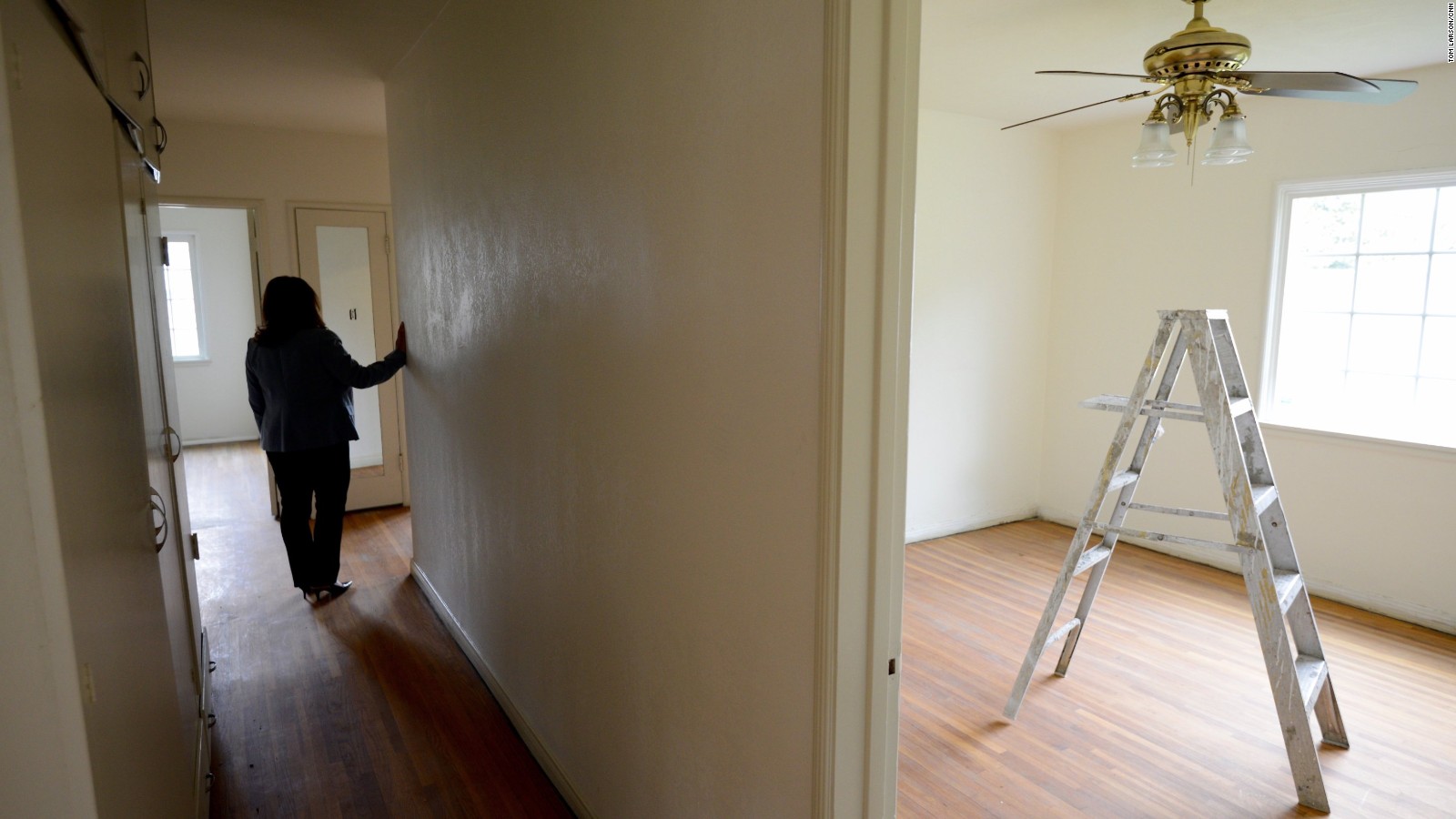
Los Angeles (CNN)A hammer pounds away in the living room of a middle class home. A sanding machine smoothes the grain of the wood floor in the dining room.

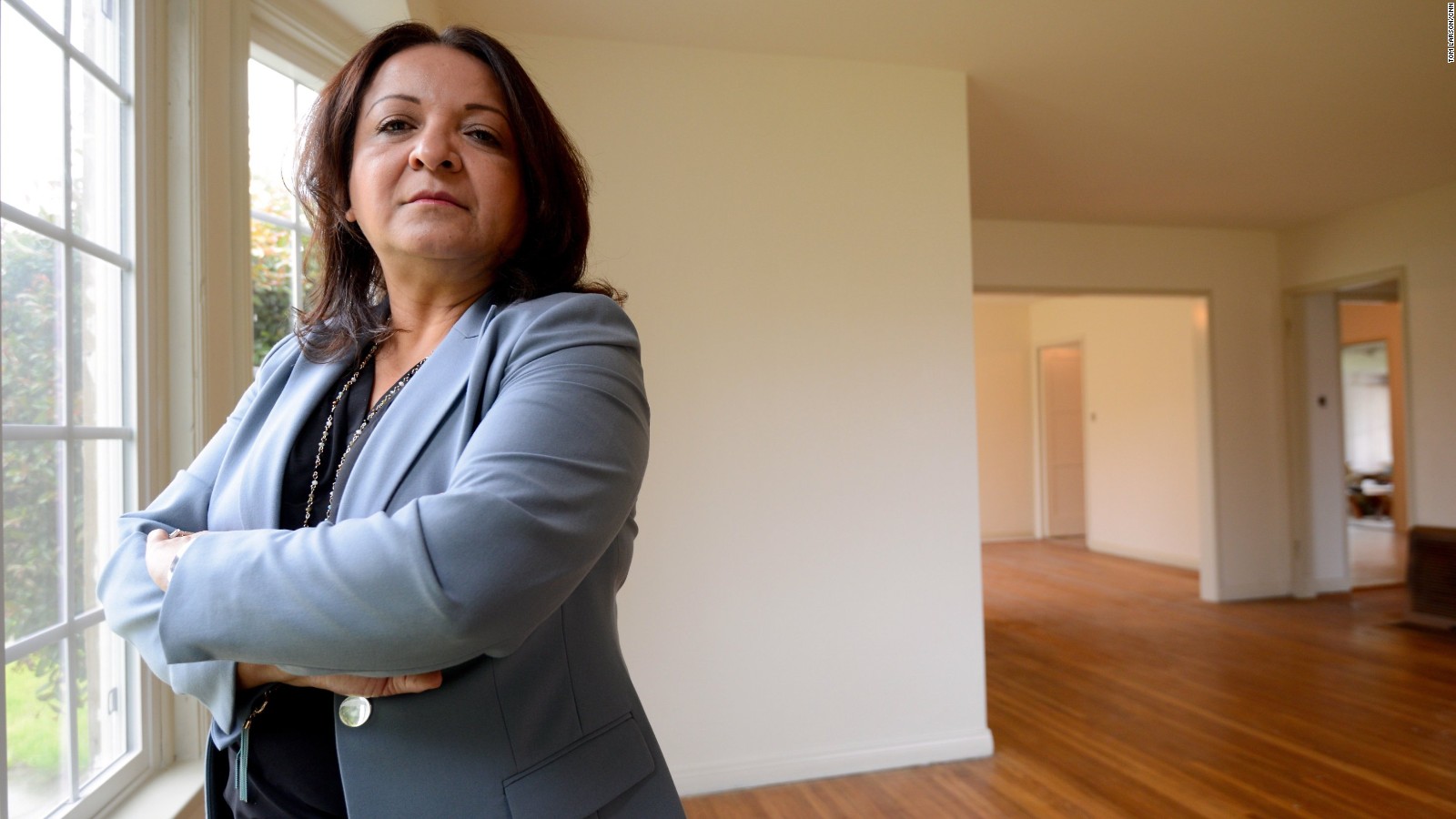
But this home Pastor Ada Valiente is showing off in Los Angeles, with its refurbished floors, is no ordinary home.

"It would be three families we host here," Valiente says.

By "host," she means provide refuge to people who may be sought by US Immigration and Customs Enforcement, known as ICE. The families staying here would be undocumented immigrants, fearing an ICE raid and possible deportation.

The purchase of this home is part of a network formed by Los Angeles religious leaders across faiths in the wake of Donald Trump's election. The intent is to shelter hundreds, possibly thousands of undocumented people in safe houses across Southern California.

Workers rush to finish flooring for homes meant to hide immigrants.

The goal is to offer another sanctuary beyond religious buildings or schools, ones that require federal authorities to obtain warrants before entering the homes.

"That's what we need to do as a community to keep families together," Valiente says.

At another Los Angeles neighborhood miles away, a Jewish man shows off a sparsely decorated spare bedroom in his home. White sheets on the bed and the clean, adjacent full bathroom bear all the markers of an impending visit. The man, who asked not to be identified, pictures an undocumented woman and her children who may find refuge in his home someday.

The man says he's never been in trouble before and has difficulty picturing that moment. But he's well educated and understands the Fourth Amendment, which gives people the right to be secure in their homes, against unreasonable searches and seizures. He's pictured the moment if ICE were to knock on his door.

"I definitely won't let them in. That's our legal right," he says. "If they have a warrant, then they can come in. I can imagine that could be scary, but I feel the consequences of being passive in this moment is a little scary."

The secret network

Rev. Zach Hoover wants to help immigrant families fearing deportation stay hidden and together.

Rev. Zach Hoover wants to help immigrant families fearing deportation stay hidden and together.

The religious leaders have a name for their network: the Rapid Response Team. The idea is not necessarily a new one, according to Reverend Zach Hoover, executive director of the interfaith community organization LA Voice.

Hoover, 37, wasn't an active member during the Sanctuary Movement of the 1980s when US congregations across faiths resisted federal law and provided shelter for Central Americans fleeing violence in their home countries. Many congregations offered direct sanctuary, housing the undocumented immigrants, while others offered food and legal assistance.

The Rapid Response Team mirrors that structure, but goes one step further by also incorporating private homes, which offer a higher level of constitutional protection than houses of worship and an ability to make it harder for federal agents to find undocumented immigrants.

Mother faces deportation, takes sanctuary
Mother faces deportation, takes sanctuary 03:42
Under federal law, locations like churches and synagogues are technically public spaces that authorities could enter to conduct law enforcement actions. In 2011, the Department of Homeland Security instituted a policy limiting ICE action at religious locations. The policy ordered ICE to not enter "sensitive locations" like schools and institutions of worship.

Religious leaders in Los Angeles that spoke to CNN are skeptical whether that policy will stand under a Trump presidency.

"There's a difference between someone knocking on your door at the church who's a federal agent and someone knocking on the door of your home, where, if they don't have a warrant, they shouldn't be entering," Hoover says.

In the hours after Trump's initial executive order on immigration, calls between religious organizers picked up, and the network rapidly grew. Hoover estimates the underground network could hide 100 undocumented people today. Soon, he believes, they could hide thousands.

Hoover points out that's a tiny fraction of the estimated one million undocumented immigrants in Los Angeles county. The network's focus would be on families fearing separation and working to keep them together by "moving into a place so that ICE can't find them," Hoover says.

"So they can stay with their families. So they can be with their husbands," Hoover says. "So they can avoid being detained and deported. Everybody talks about how families are the bedrock of our country. We believe that. Our congregations believe that."

God's law versus Trump's law

Pastor Ada Valiente is putting her trust in God that faith leaders are doing the right thing.

Pastor Ada Valiente is putting her trust in God that faith leaders are doing the right thing.

The strong current carrying the Rapid Response Team is the divergence of federal laws and the moral teachings of their religions. Hoover points to the Bible's Matthew 25, which teaches the faithful should feed the hungry and fight for those in prison.

"The God that I worship sent a person to earth in the name of Jesus who did not always get along with the authorities," Hoover explains. "I feel really convicted that I answer to God at the end of the day. That's who I'm going to see when I die."

Pastor Valiente echoes that sentiment, saying US immigration laws are broken and her church's foundation are the families.

"We're trusting in God, that he will help us and guide us to make the right decision, to have something better come out of this," Valiente says.

Valiente says she's praying President Trump's heart will grow more compassionate to the plight of undocumented immigrants.

"He needs to make immigration laws that work for our families," Valiente says.

The Jewish man offering his home as a safe house says he draws upon his religion's history during WWII. As the Nazis rounded up Jews for detention and eventual extermination, Germans resisted their government, hiding their Jewish friends and neighbors in attics and basements.

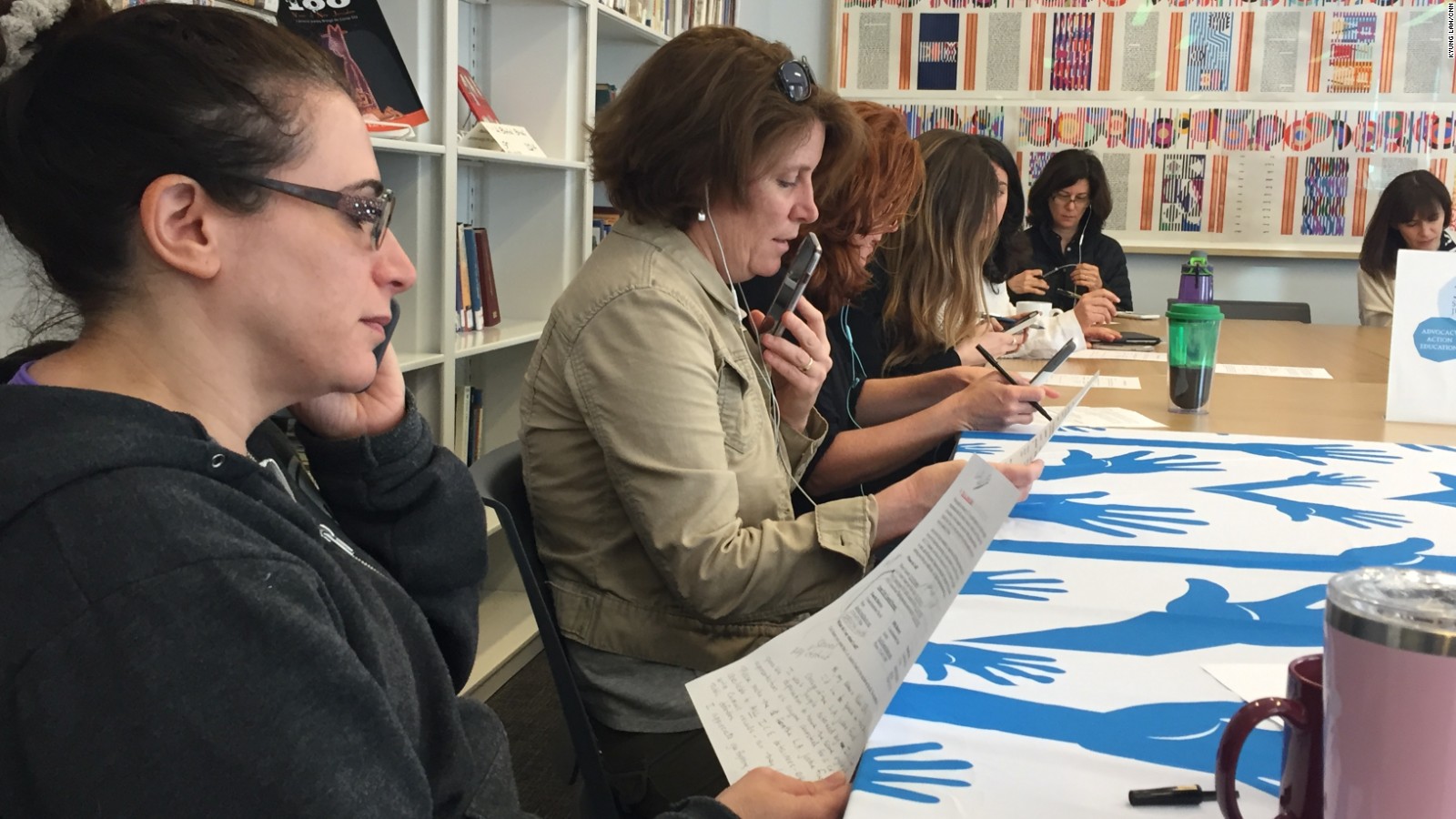
Volunteers call elected officials at the Temple Israel of Hollywood

"It's hard as a Jew," he says, "not to think about both all the people who did open their doors and their homes and take risks to safeguard Jews in [a] moment when they were really vulnerable, as well as those who didn't. We'd like to be the people who did."

He's not the only one in his community feeling this way. Volunteers are flooding in to offer to help with the network at Temple Israel of Hollywood, according to Heidi Segal, the temple's vice president of social action.

Three weeks ago, Temple Israel of Hollywood began a phone bank to call lawmakers. On the day CNN visited the temple, the room was filled with volunteers.

"Our immigration resistance effort," Segal says as she shows off the room.

While the temple is not offering direct refuge at their temple for the undocumented, volunteers will escort immigrants for deportation interviews. They're also offering free legal advice and support, as well as stocking sanctuary houses with food and clothing.

"We had a really strong response immediately and as people learn, the response is just growing," Segal says.

An uneasy choice

Pastor Ada Valiente stands in a home meant to house undocumented immigrants.

Pastor Ada Valiente stands in a home meant to house undocumented immigrants.

The growing energy of the network doesn't mean the members aren't also apprehensive or fearful about the consequences. The people forming the network are not a crowd with criminal records. While there's clarity in the sanctity of family and religious calling, there's also concern about how the new Department of Justice will operate under Attorney General Jeff Sessions.

The Jewish man offering his home as a safe house says it's "certainly scary." While he's not clear on the consequences of what he's doing, or where he draws his limits, he is clear on one point.

"I think I know what the moral consequences are for me if we don't act. This isn't a moment to be standing idly by," he says. "This is a moment to be engaged and involved and I think we're seeing that across America where people are saying this isn't okay. We're not going to tolerate this and we'll have our voices heard."

Mark Krikorian, executive director of the conservative Center for Immigration Studies, says the law is clear about what these groups are intending to do.

"They're committing a felony. Harboring is a felony," Krikorian says. "Regular folks hiding people in a basement face jail time because it is ultimately a smuggling conspiracy."

Hoover, a self-professed good Midwestern-raised boy, says he's prepared for the federal consequences.

Valiente says religious leaders opposing immigration crackdowns believe one simple thing: "We're doing what we think is right."

Valiente says the last of the construction on her safe house is nearly complete. She'll house someone, she fears, as soon as next month.


^ed 

Donald Trump in Palm Beach: ‘This has been an amazing’ Super Tuesday | Post On Politics

Donald Trump in Palm Beach: 'This has been an amazing' Super Tuesday | Post On Politics

Donald Trump in Palm Beach: 'This has been an amazing' Super Tuesday

UPDATE: With an introduction from New Jersey Gov. Chris Christie, Donald Trump took the stage Tuesday night at Mar-a-Lago in Palm Beach.

IMG_3893"This has been an amazing evening already," Trump said of his Super Tuesday wins.

"We're gonna spend a lot of time in Florida," Trump said, adding that he's making big investments in Florida and Virginia.

Trump promised to stop companies from moving to Mexico, along with creating jobs in the U.S.

"We are losing so much. We can't let it happen," Trump said.

He also touted his campaign as helping "expand the Republican party" — because, he said, he's drawing people to the polls who otherwise may not have voted or were registered to vote as Democrats.

When asked about whether or not he had been "equivocal" about hate groups endorsing his campaign, Trump said he has "disavowed" the KKK (read more about that here) several times at campaign appearances, on social media and on TV appearances.

When asked if Florida Gov. Rick Scott would endorse him, Trump said he did not know who Scott would endorse.

Read more here.

EARLIER STORY: Just before 7 p.m. Tuesday, with polls set to start closing
across several Super Tuesday states, at the Mar-a-Lago estate in Palm Beach, reporters and other media, having worked their way through the usual security checks, waited in a large conference room.

There they awaited an appearance, set for 9 p.m., of  Republican front runner — and the guy who owns the place — Donald Trump.

Dozens of cameras framed the room, flanked at one end with a stage lined with U.S. flags. Cords snaked across the floor.  An official provided microphone sound checks. And in a practice to which bored and desperate reporters sometimes descend, they were taking pictures of each other taking pictures of each other.

The only news during the long wait: news reports about early returns from Super Tuesday states. And an email from Trump's campaign just before 8 p.m. saying he'd be holding a rally Saturday at the University of Central Florida, near Orlando.

Click here for a photo gallery from the event

LIVE on #Periscope: Conference room where Trump is set to speak at 9 PM https://t.co/uPvkb9xeMd

— Eliot Kleinberg (@eliotkpbp) March 1, 2016

Check back here for live updates throughout the night.


^ed